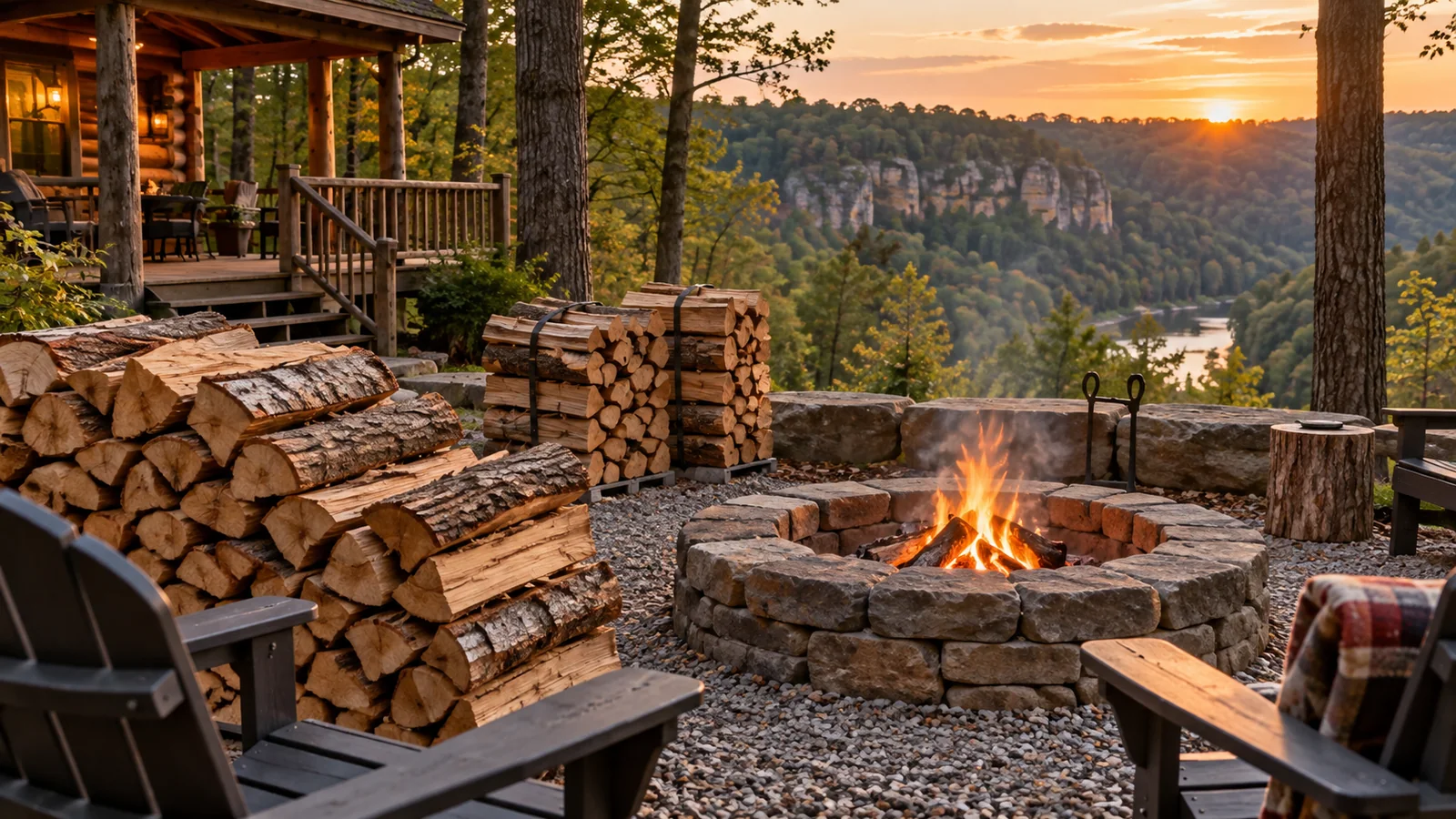
The Hocking Hills Cabin Check-In Firewood Checklist
Before you pour a drink and light the first fire, spend two minutes confirming the appliance, the guest rules, the wood supply, and how you will put the fire out. This is the arrival checklist.
Quick answer
Do not make firewood the first thing you troubleshoot after dark. At check-in, identify the approved fire feature, read the host instructions, inspect the wood supply, locate kindling and an ignition method, and confirm the extinguishing procedure before the first match.
Why the check-in inspection matters
The listing is marketing. Check-in is reality. Weather can soak an outdoor stack. A previous guest can use more wood than expected. The owner may temporarily close an indoor fireplace. An outdoor ring can look obvious but still have property-specific rules posted in the welcome guide.
A two-minute inspection while there is still daylight catches these problems when they are easy to solve.
The 12-step arrival checklist
- Confirm indoor fireplace type: wood, gas, electric, or unavailable.
- Find the current host fire rules.
- Locate the approved outdoor ring.
- Identify which wood supply is for guests.
- Check whether additional wood is available and how to get it.
- Look for obvious wet or unusable wood.
- Find approved kindling/fire starters and ignition tools.
- Check weather and any host restrictions.
- Locate the extinguishing method.
- Keep the main wood supply in the approved dry location.
- Decide how much of the supply tonight's fire should use.
- Read the ash/checkout procedure before the last night.
1. Confirm the fire feature, not just the photo
Walk to the outdoor ring and look at the indoor fireplace. If the indoor unit is gas or electric, treat it as an appliance rather than a place for firewood. If it is wood-burning, locate the host instructions before you carry logs inside.
2. Find the property rules
Look in the welcome binder, arrival email, posted sign, or booking app. Fire rules can cover where to burn, whether outside wood is allowed, quiet hours, use during high wind, ash handling, and whether fires must be completely extinguished before guests go inside.
If there is a conflict between a blog article and the host's current instructions, the host's rules control the property.
3. Identify the guest wood supply
A beautiful stack next to a shed may be the owner's reserve. A small rack may be included while the larger pile is sold separately. Do not assume that visible wood is free or intended for your unit.
If the supply is unclear, message the host before using it.
4. Judge whether the wood is usable tonight
You are not conducting a laboratory moisture test. You are simply looking for obvious problems: wood sitting in standing water, pieces coated in ice, a stack uncovered during heavy rain, or wood so visibly fresh and wet that it is unlikely to light well.
If the provided wood is unusable, take a photo and contact the host or supplier rather than improvising with flammable liquids or random material.
5. Locate the small stuff
A pile of large splits without kindling can make the first fire much harder than it needs to be. Find the approved kindling, fire starters, matches, or lighter. If the property does not provide them, solve that before dinner.
Do not peel bark off structures, cut vegetation, or collect random wood from the property unless the host explicitly allows it.
6. Check the weather before an outdoor fire
Rain mainly affects comfort and ignition. Wind affects sparks and control. Very dry conditions can lead to temporary restrictions. The rental owner may have rules that are stricter than general conditions.
If the host says no outdoor fire tonight, the presence of a fire ring does not override that answer.
7. Know exactly how you will extinguish it
Find the water source, hose, bucket, or other method the property expects. Do this before lighting, not at midnight when everyone wants to go inside.
An outdoor fire is not finished when the flames disappear. Follow the host's instructions for fully extinguishing coals.
8. Plan tonight’s fire before you use half the supply
Look at the amount of wood and decide whether it needs to cover one evening or an entire weekend. A group can accidentally burn the weekend supply in the first night simply because nobody made that distinction.
If you will need more, order or buy it while local options are still open.
9. Stage the wood without creating a new problem
Keep the main supply in the approved dry location. Do not stack wood against the cabin, in front of a door, across steps, or where guests can trip over it in the dark. Bring only a modest amount indoors if the host allows indoor storage.
10. Check the last-fire rule now
Some properties want ashes left in place. Some provide a metal ash container. Some ask guests not to remove anything. Knowing this on arrival prevents an unsafe cleanup experiment on departure morning.
A printable-style quick list
- Fire feature identified
- Host instructions found
- Guest wood supply confirmed
- Wood dry enough to use
- Kindling / starter available
- Lighter / matches available
- Weather checked
- Extinguishing method ready
- Extra wood plan known
- Checkout / ash rule known
If something is missing
Take a photo, message the host, and solve the specific gap. Missing wood calls for wood. Missing kindling calls for kindling. A closed fireplace calls for a different plan. Treating every problem as “I need to build a bigger fire” is how small cabin inconveniences become unsafe ones.
What this means for a typical two-night cabin stay
Think through the trip in sequence: arrival, first-night fire, daytime plans, second-night fire, and checkout. The firewood decision is easiest before the first step. Once the group is settled, nobody wants to leave a warm cabin to solve a supply problem that could have been handled from the car.
That is why the practical questions in this guide are intentionally repetitive around type of fire, quantity, access, dryness, and property rules. Those five variables explain most firewood surprises without requiring a traveler to become an expert on wood species or combustion.
If you would be annoyed to discover the answer after dark, ask the question before check-in.
Check-in before sunset versus after sunset
If you arrive with daylight, use it. Walk the path to the fire ring, identify the wood rack, and find the extinguishing method. Look for uneven steps, steep grades, and places that will be difficult to navigate while carrying wood after dark.
If you arrive after sunset, resist the urge to start the fire immediately. Unload, turn on exterior lighting, read the host instructions, and confirm the approved setup first. A ten-minute delay is cheaper than discovering you used the wrong stack or missed a posted rule.
Families and pets need one more layer of setup
Before lighting an outdoor fire, decide where children and pets will be relative to the ring. Move leashes, toys, blankets, and folding chairs out of the immediate fire zone. Indoors, keep pet beds and children's gear away from the hearth and tools.
A cabin layout can feel spacious in daylight and crowded once everyone gathers around the same heat source. Create the safe zone before the room fills.
If the cabin is out of wood
Photograph the empty rack, then contact the host. If the listing or arrival message promised a supply, give the owner an opportunity to solve it. If the property expects guests to purchase wood, use the approved local option or delivery method.
Do not start collecting fallen branches or cutting wood from the property. Besides potential rules and environmental issues, random wet wood is a poor substitute for prepared firewood.
If the only wood is too large for the indoor fireplace
Do not force a split into the firebox or leave the door or screen in an unsafe position to accommodate it. Ask whether there is a separate indoor supply. If not, the host or a local supplier may be able to provide smaller splits. Use the outdoor supply outdoors until the issue is clarified.
The checkout-morning check
Before loading the car, look at the fire area one last time. Follow the host's instructions for ashes and remaining wood. Make sure no fire is active, no guest items are left around the ring, and the wood station is not blocking a path after the group moves chairs and luggage.
If you ordered a delivery and substantial wood remains, leave it in the approved location unless the owner tells you otherwise.
Five check-in mistakes that create most firewood headaches
Waiting until nightfall to inspect the setup. Darkness makes every small problem harder: the woodshed is difficult to find, the fire ring path is unfamiliar, and a wet stack looks like a reason to improvise instead of a reason to contact the host.
Assuming every visible stack is guest inventory. Owners may store maintenance or reserve wood on the same property. Use only the supply identified for guests.
Burning the weekend supply on the first night. If the host provides a finite rack, estimate whether it needs to last through checkout before building the largest fire of the trip.
Moving outdoor wood indoors without permission. Indoor storage, split size, and fireplace rules can differ. Keep bulk wood outside in the approved location.
Leaving the extinguishing plan until bedtime. Know the property's method before lighting. The end of the fire should be planned at the beginning.
Use the checklist again before the second night's fire
The first-night setup can change after a day of hiking. Chairs get moved, the wood rack gets left uncovered, kindling disappears, and weather changes. Before the second fire, repeat the fast version of the checklist: approved fire area, dry fuel, current weather, extinguishing method, and enough remaining wood for the plan.
This is especially useful for groups because the person tending the fire on Saturday may not be the person who handled check-in on Friday. A repeatable process transfers knowledge without requiring everyone to read the entire rental binder.
Small habit, big payoff Photograph the firewood setup at check-in if the trip depends on it. The photo gives the group a reference for what was provided, helps with any host question, and makes it obvious how much of the original supply remains before the second night.
Confirm the cabin allows outside delivery, then arrange local firewood using the exact property address, stay dates and approved drop point.
Put the checklist beside the grocery list
If one person in the group handles check-in, give that person the firewood questions too. A family cabin trip already has enough moving parts: food, pet gear, chargers, hiking shoes, medication, and door codes. Firewood belongs in the same arrival system because it is easiest to solve before the group disperses into the cabin.
What not to do when the supply is missing
Do not cut standing or fallen wood from the property, dismantle landscape wood, burn trash, or use gasoline or similar accelerants. Contact the host, use an approved local source, or skip the fire until you have the correct fuel.
Firewood trip-planning glossary
| Term | Plain-English meaning for a cabin guest |
|---|---|
| Seasoned firewood | Wood that has been dried for burning rather than freshly cut green wood. |
| Kindling | Small dry material used to establish the first flame before larger splits are added. |
| Split | A piece of firewood that has been divided from a larger round. |
| Firebox | The chamber inside a fireplace or stove where fuel burns. |
| Damper | A control in some fireplaces that affects the exhaust path and draft. |
| Par level | For owners, the target inventory level to have ready for the next guest. |
One final check before travel day
Read the host's most recent arrival message rather than relying on the listing you booked months earlier. Property rules, access instructions, available amenities, and seasonal conditions can change. If the fire is important to the weekend, confirm it the same way you confirm the door code: close enough to the trip that the answer is current.
Frequently asked questions
Should I inspect the wood before unloading the car?
It is a good idea, especially if a fire is part of the first-night plan. You can solve a missing or wet supply before local options close.
Can I use any wood stacked on the property?
No. Confirm which stack is intended for guests and whether there is a charge.
What if no lighter or kindling is provided?
Buy approved ignition supplies rather than using accelerants, trash, or material taken from the property.
What if the outdoor ring is wet?
A wet ring may still be usable later, but follow the host's rules and do not use flammable liquids to force ignition.
Do I need to remove ashes before checkout?
Only if the property tells you to. Follow the host's ash procedure.
Information reviewed September 26, 2026. Property rules, weather conditions, business availability, and pest-quarantine boundaries can change. For legal firewood-movement questions, use current Ohio Department of Agriculture and Ohio Administrative Code sources.