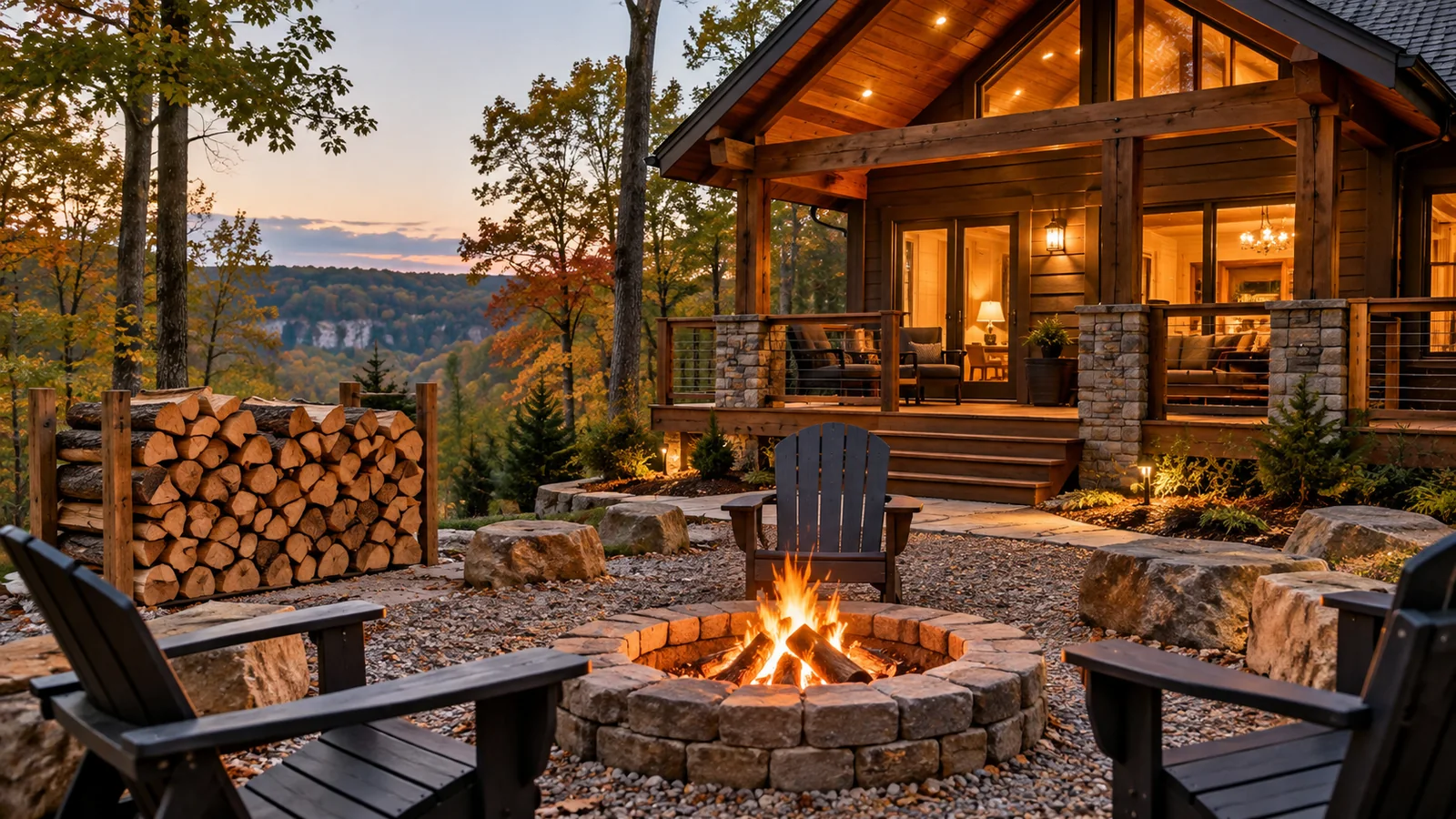
The Cabin Fireplace Checklist: 7 Questions to Ask Before You Put a Log Inside
A stone hearth may be the coziest part of a Hocking Hills cabin, but a listing photo cannot tell you whether it burns wood, whether guest use is allowed, or how the property expects you to operate it.
Quick answer
Before lighting an indoor fire, confirm the appliance type, guest-use rules, allowed fuel, damper or control instructions, screen or door requirements, ash procedure, and what to do if smoke does not draft correctly.
1. Is the fireplace actually wood-burning?
This sounds too obvious to be a real problem until you browse cabin photos. A gas-log insert can sit inside a stone masonry surround. An electric unit can be framed to look like a traditional fireplace. A decorative hearth may be present even when the property does not allow fires at all.
Read the listing language and ask the host if there is any ambiguity. “Fireplace” is not enough. The words you are looking for are wood-burning fireplace or wood stove. If it is gas or electric, do not place logs, paper, fire starters, or any other combustible material inside.
2. Are guests allowed to use it during this stay?
A real wood-burning fireplace can still be temporarily unavailable. A chimney may be awaiting service, a local condition may change the owner's policy, or the fireplace may only operate during part of the year.
The rental agreement, welcome guide, and host instructions are the authority for that specific property. If the listing and arrival guide disagree, ask. Do not assume that an older listing photo overrides current instructions.
3. What fuel does the host allow?
Some cabin owners want guests to burn only the seasoned wood provided on site. Others allow locally purchased firewood. Wood stoves can have strict log-length limits, and some owners prohibit wax-heavy manufactured logs or certain fire starters.
Never burn pressure-treated lumber, painted wood, construction scraps, plastic-coated material, trash, or random branches gathered from the property. An indoor fireplace is not a disposal system. Use the fuel the host approves.
4. How do the damper, doors, and screen work?
A wood fire needs a clear exhaust path. Many traditional fireplaces use a damper that must be opened before lighting. Wood stoves may use air controls rather than an open damper. Some fireplace doors remain open during normal burning behind a spark screen; others operate differently.
Do not guess based on a fireplace you used somewhere else. Look for the property's instructions. If none are available and you do not understand the controls, message the host before lighting.
The best time to figure out the draft is while the fireplace is cold.
A quick pre-light inspection
| Check | What you are looking for | If unclear |
|---|---|---|
| Fuel type | Wood, gas, electric, or decorative | Ask host before adding anything |
| Draft controls | Damper or stove air control | Use property instructions |
| Screen/doors | Required operating position | Do not assume |
| Firebox size | Logs fit without forcing | Use smaller approved splits |
| Ash container | Host-approved metal container or leave-in-place rule | Do not put hot ash in trash |
| Nearby combustibles | Blankets, luggage, dog beds, furniture kept back | Clear the hearth area |
5. Is the wood sized for the firebox?
Large outdoor splits can be frustrating in a compact indoor fireplace and completely unsuitable for a small stove. Before carrying a pile inside, compare a few pieces to the actual firebox.
You want enough space to arrange the fuel without forcing logs against doors, glass, or a screen. If the host provides a dedicated indoor rack, that is a good clue about the intended quantity and split size.
6. What is the ash procedure?
Ash can conceal hot coals long after visible flames disappear. Never shovel fresh ash into a paper bag, cardboard box, plastic trash can, or wooded area. Follow the host's instructions and use the approved metal container if one is provided.
Do not decide on your own that the fireplace “needs cleaning” between fires. Leaving a small ash bed can be normal in some wood-burning systems; other properties want the guest to leave everything for maintenance. The host's procedure wins.
7. What is the plan if smoke enters the room?
If smoke does not draft correctly, stop adding fuel. Confirm that you followed the property's venting instructions and that doors or controls are in the correct position. If the cause is not immediately obvious, contact the host rather than continuing to build a larger fire.
Do not use flammable liquids or improvised accelerants to “fix” a reluctant fire. A drafting problem is not solved by creating more flame.
Fireplace night with children or pets
The cabin environment can feel controlled, but an open hearth introduces sparks, hot metal, hot stone, and tools that remain hot after the fire settles. Keep children and pets away from the fireplace zone and treat screens, doors, pokers, and grates as hot until proven otherwise.
Do not let blankets, dog beds, luggage, or drying clothes creep toward the hearth as the evening gets comfortable.
The last fire of the stay
Do not start a large new fire shortly before checkout or bedtime. Give the fire time to burn down and follow the property's extinguishing and ash instructions. The goal is to leave no active flame and no uncertainty for the next person entering the cabin.
A responsible last fire is smaller, earlier, and easier to monitor than the first one.
What this means for a typical two-night cabin stay
Think through the trip in sequence: arrival, first-night fire, daytime plans, second-night fire, and checkout. The firewood decision is easiest before the first step. Once the group is settled, nobody wants to leave a warm cabin to solve a supply problem that could have been handled from the car.
That is why the practical questions in this guide are intentionally repetitive around type of fire, quantity, access, dryness, and property rules. Those five variables explain most firewood surprises without requiring a traveler to become an expert on wood species or combustion.
If you would be annoyed to discover the answer after dark, ask the question before check-in.
A safe starting sequence is intentionally slow
Indoor wood fires are easier when you resist the temptation to make the first flame huge. Use the host-approved setup: open the required draft control, arrange a small amount of dry kindling or approved starter material, establish a stable flame, then add modest splits as the fire develops. The exact method depends on the appliance, so the cabin instructions matter more than a generic internet technique.
Never use gasoline, camp fuel, lighter fluid, or another volatile liquid in an indoor fireplace. If the fire will not establish with dry approved materials, treat that as a troubleshooting problem rather than an invitation to add accelerant.
Draft problems can look like fuel problems
A fire that smolders, spills smoke into the room, or refuses to strengthen may not need more wood. The damper may be closed, the stove control may be set incorrectly, or the appliance may be unavailable for use. Weather and a cold chimney can also affect initial draft in some systems. If the property instructions do not quickly resolve the issue, stop adding fuel and contact the host.
Opening exterior doors or windows, changing dampers, or operating fans can affect pressure in a building. Do not experiment with a system you do not understand. Use the host's instructions.
Fireplace screens and glass doors are not decoration
Some open fireplaces rely on a spark screen to contain embers while allowing the fire to breathe. Some factory-built fireplaces have glass doors with specific operating instructions. Wood stoves are designed to burn with their doors closed. These are not interchangeable habits.
Before the first fire, identify which component is intended to remain open or closed. If you cannot tell, ask. A cabin fireplace should not be the place you test a memory from a different house.
Build the seating area around the fire, not into it
Guests naturally pull chairs toward warmth. Children put shoes near the hearth. Wet gloves appear on stone ledges. Dog beds migrate toward the cozy spot. Reset the area before lighting: keep textiles, luggage, paper bags, firewood packaging, and furniture at a sensible distance according to the property instructions.
Do not use the hearth or stove top as a drying rack unless the appliance was explicitly designed for that purpose.
Know the difference between “fire is out” and “ashes are cold”
Visible flame can disappear while embers remain hot for hours. That is why ash disposal deserves its own question. If the host tells guests to leave ashes for maintenance, leave them. If the property provides a metal ash container and specific instructions, follow them. Do not put warm ash in a plastic bin, paper bag, cardboard box, or outside leaf pile.
On the last night, start the fire early enough that you can monitor it as it burns down. A large midnight fire and an early checkout are a poor combination.
Common cabin-fireplace assumptions worth avoiding
“The last guest used it, so we can too.” You do not know whether the previous use was authorized or whether the fireplace's status has changed. Use the current host instructions.
“More flame will fix poor draft.” A drafting or control problem can become worse when more fuel is added. Stop, verify the setup, and contact the host if needed.
“The glass doors are just decorative.” Operating position depends on the appliance. Follow its instructions rather than copying another fireplace.
“Anything made of wood can be burned.” Painted, treated, manufactured, or trash material can be inappropriate or hazardous. Burn only approved clean firewood and starters.
“No flames means safe to clean.” Embers can stay hot. Treat ash as potentially hot until the property's process says otherwise.
Save the fireplace instructions before cell service becomes an issue
If the host provides operating instructions in a booking app, email, or web portal, screenshot them before the rural part of the drive. You should not need an internet connection to remember which control opens the damper or where the ash bucket is stored.
That small preparation is particularly useful when several adults will use the cabin and the person who booked it is not always the person tending the fire.
Confirm the cabin allows outside delivery, then arrange local firewood using the exact property address, stay dates and approved drop point.
Fireplace problems that are not solved by adding more wood
Poor draft, a closed damper, a blocked or unavailable appliance, wet fuel, and incorrect air controls can all look like “the fire will not catch.” Adding more fuel before you understand the cause can make smoke and cleanup worse. If the property instructions do not resolve the problem quickly, stop and contact the host.
Keep the hearth area boring
Move luggage, blankets, dog beds, drying shoes, grocery bags, and decorative items away from the hearth before lighting. Cabin living rooms are compact, and items tend to migrate toward the warmest place in the room. Reset the area before every fire.
Firewood trip-planning glossary
| Term | Plain-English meaning for a cabin guest |
|---|---|
| Seasoned firewood | Wood that has been dried for burning rather than freshly cut green wood. |
| Kindling | Small dry material used to establish the first flame before larger splits are added. |
| Split | A piece of firewood that has been divided from a larger round. |
| Firebox | The chamber inside a fireplace or stove where fuel burns. |
| Damper | A control in some fireplaces that affects the exhaust path and draft. |
| Par level | For owners, the target inventory level to have ready for the next guest. |
One final check before travel day
Read the host's most recent arrival message rather than relying on the listing you booked months earlier. Property rules, access instructions, available amenities, and seasonal conditions can change. If the fire is important to the weekend, confirm it the same way you confirm the door code: close enough to the trip that the answer is current.
Frequently asked questions
Can I assume a stone fireplace burns wood?
No. Stone surrounds can contain gas or electric appliances. Confirm the actual fuel type.
Can I bring my own wood for an indoor fireplace?
Only if the host permits outside local firewood and the wood meets the property's size and fuel rules.
Should fireplace doors be open or closed while burning?
It depends on the appliance. Follow the property or manufacturer instructions rather than a generic rule.
Can I burn cardboard or trash to get the fire going?
Use only approved kindling and fire starters. Do not use the fireplace to burn household trash or treated materials.
What if the cabin has a carbon-monoxide alarm?
Do not disable it. If an alarm sounds or anyone experiences symptoms consistent with combustion exposure, leave the building and follow emergency guidance.
Information reviewed September 26, 2026. Property rules, weather conditions, business availability, and pest-quarantine boundaries can change. For legal firewood-movement questions, use current Ohio Department of Agriculture and Ohio Administrative Code sources.